

Start with your local and state events as they deliver the highest ROI per dollar for founder-led teams. Then add 2-4 national shows based on your target category (CTE, after-school/OST, IT leadership) and your ability to book meetings from each event.
I ran event strategy for a K-12 EdTech company where we cut our conference calendar by 29% (from 17 events to 12) and saw a 55% increase in event-sourced sales year-over-year. The difference wasn’t luck. It was three shifts:
- Prioritizing smaller state and district events over mega-conferences
- Tailoring every piece of collateral to the specific audience silo: CTE, after-school, STEM, and foregoing the generic “we do EdTech” or “We engage your students” messaging
- Treating follow-up as seriously as the booth itself. Send personalized outreach within the first week: early enough to stay top-of-mind, but tailored to their schedule. December events near winter break may warrant waiting until January.
Districts buy slowly. The buying cycle can stretch 12-18 months, and most vendors will create 15-30 touchpoints across 12-18 months before closing a district-wide deal. Site adoptions or pilots move faster, but district-wide sales require patience. Conferences aren’t where you close deals—they’re where you accelerate trust, qualify interest, and create the moments that move conversations forward. Choose events where your ICP actually shows up, and design every interaction to be worth remembering.
.webp)
The 8 Best EdTech Conferences for K-12 Vendors, Ranked by ROI
Ranked by cost-efficiency and buyer density for lean, founder-led teams:
- State CTE Conferences (Educating for Careers, NC CTE Summer) — $1,000–1,250 booth. Highest decision-maker density per dollar. If you sell to CTE programs, these are non-negotiable.
- TCEA Convention (Austin, TX) — $1,350 booth. Texas is the second-largest K-12 market. Strong instructional tech focus with engaged district leadership.
- AASA National Conference on Education — $2,250 booth. Direct access to superintendents and cabinet-level buyers. Worth it if your sale requires executive sponsorship.
- Spring CUE (Palm Springs, CA) — $2,800 booth. California’s premier ed-tech event. Excellent for learning technology vendors targeting the West Coast.
- FETC (Orlando, FL) — $3,900 booth. National reach with strong IT leadership attendance. Best for vendors needing broad awareness or launching products.
- ISTE — $5,000+ booth. The biggest tent in EdTech. High volume, but diluted buyer density. Better for brand awareness than pipeline.
- SXSW EDU (Austin, TX) — ~$5,000+ booth. Innovation-forward positioning. Great for startups seeking press, partnerships, or investor visibility.
- ASU+GSV Summit (San Diego, CA) — $20,000+ all-in. Not a buyer event—it’s an investor event. Skip unless you’re actively fundraising.
2026-2027 Conference Pricing at a Glance
*Lean all-in estimate = booth + ~$1,500–2,000 travel baseline (flights for 2, budget lodging, meals, shipping). Multiplier approaches 1.5–2× as booth cost increases. Add 30–50% for extra staff, premium lodging, or client dinners.
†FETC 2025 pricing shown; 2026 rates typically increase 5-10%
The math for lean teams: A founder-led company could attend 3-4 state CTE conferences for the all-in cost of a single FETC booth. If your ICP is concentrated in specific states or verticals, the ROI math often favors regional saturation over national visibility.
How to Choose: A Scorecard for Lean Teams
Before committing budget, run each conference through these questions:
Buyer density: Does this event attract your actual ICP, or a broad audience where you’ll be fishing for needles? A 3,000-person state conference with 60% decision-makers beats a 10,000-person national event with 15% decision-makers.
Category alignment: Is the event focused on your vertical (CTE, STEM, IT leadership, curriculum), or will you be competing with hundreds of unrelated vendors for attention?
Pre-meeting potential: Can you identify prospects attending and reach out beforehand? Even 2-3 pre-booked meetings with qualified decision makers can justify the trip. Response rates on cold outreach are low as most conversations still happen at the booth, but warm prospects who confirm they’ll stop by in advance are higher-intent than badge scans.
Speaking opportunities: Can you present a session? Workshops and presentations build credibility faster than booths—and they’re often free or low-cost compared to sponsorships.
Competitive presence: Are your top 3-5 competitors exhibiting? If yes, you may need to be there. If no, ask why—maybe they know something you don’t.
Lean team hack: If you’re unsure about a conference, attend without a booth the first year. Present a session if you can get accepted, join the hallway conversations, show up at happy hours. You’ll learn whether the buyer density is real before committing $5,000+ to a booth.
State and Regional Events: The Underrated Opportunity
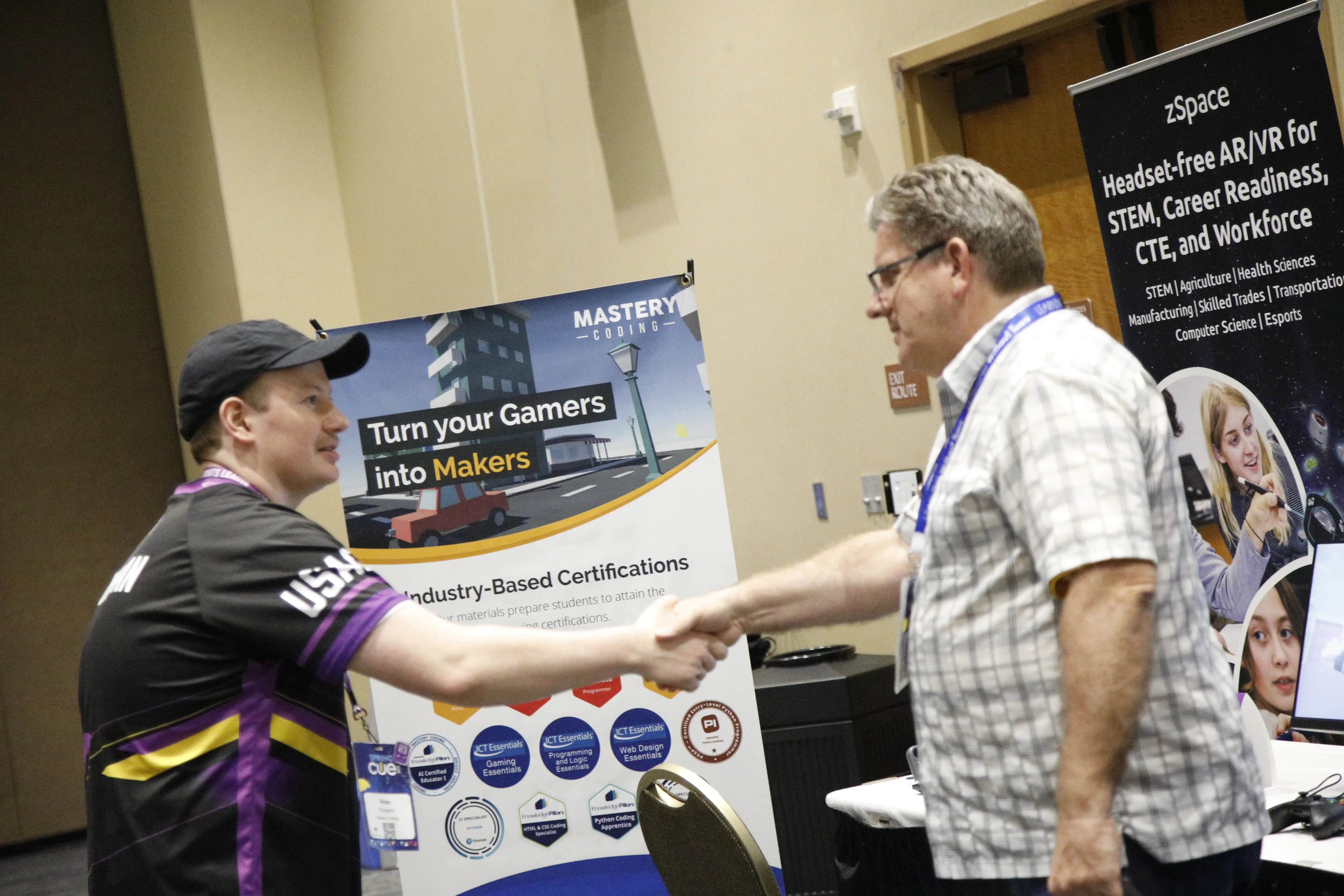
National conferences get the headlines, but state and regional events often deliver better ROI for lean teams. Here’s why:
Lower cost, higher density: A $1,000 booth at Educating for Careers puts you in front of California CTE decision-makers who are actively looking for solutions. A $4,000 booth at a national event puts you in front of... everyone, which often means no one in particular.
Relationship depth: At smaller events, you have time for real conversations. You can meet the same district leaders multiple times across sessions, meals, and hallways. By day three, you’re not a stranger—you’re a familiar face.
Regional credibility: Districts trust vendors who understand their state’s standards, funding cycles, and political landscape. Showing up consistently at state events signals commitment.
Case Study: Spring CUE STEM Zone (March 2025)
I led a 5,000 sq ft activation at Spring CUE with a $5,500 budget and instructions to “spend as little as possible.” By recruiting 7 brand partners (Microsoft, iBUYPOWER, zSpace, and others), we created an interactive experience where educators could explore cutting-edge tech through a passport-style scavenger hunt.
Results: 750+ educators engaged, 250 qualified leads captured, and partners contributed $7,500 in raffle prizes—thrilled with the traffic our gamification drove to their stations. At the final-day raffle, we had roughly 100 educators gathered, and a curriculum director won a gaming PC.
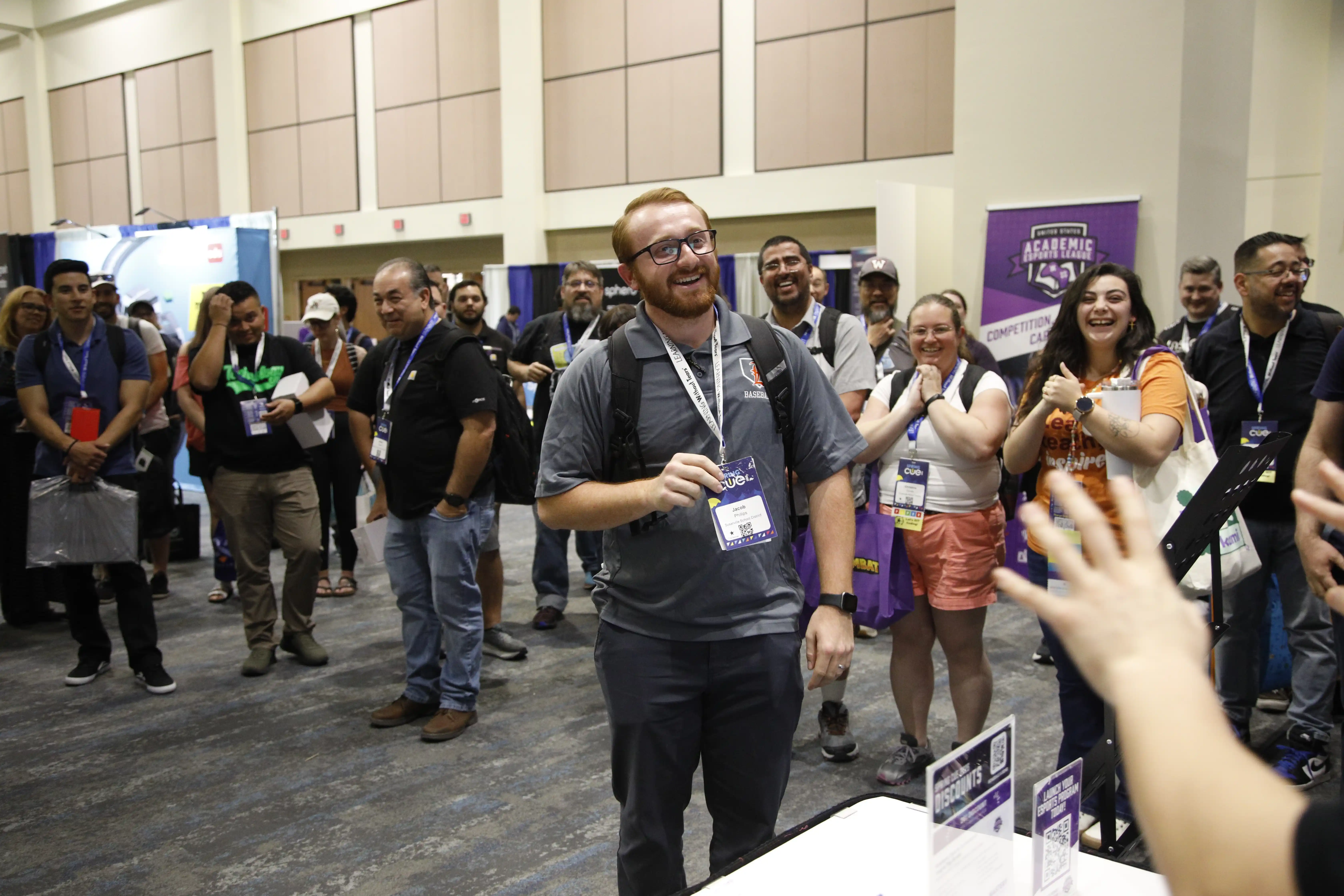
The lesson: Design an activation that gets attendees to move through your space with a clear incentive. Passive booths get passed. Gamified experiences get remembered and your partners will thank you for the traffic.
National Conferences: When the Investment Makes Sense
National events like FETC, ISTE, and ACTE’s VISION make sense when: you’re launching a new product and need broad awareness; your ICP is geographically dispersed and hard to reach regionally; you’re targeting a specific vertical where the national event is the gathering (e.g., CTE at ACTE VISION); you have the team to staff a booth AND work the hallways AND attend sessions; and you have existing relationships with prospects who'll be attending, or you're meeting current customers face-to-face.
Case Study: ACTE VISION Launch (December 2022)
We launched a new esports league brand at ACTE’s VISION conference in Las Vegas with a 10x20 booth in a prime location. But the booth was just the beginning.
We secured a VIP reception at the HyperX Esports Arena, where 400+ K-12 educators watched a live tournament with a full production crew and learned about careers in esports. We hosted a dinner for 20+ guests including close partners and high-ranking ACTE officials. We recorded a live podcast with two co-founders and a partner vendor on the expo floor. And I delivered an “Esports Jeopardy” workshop—a gamified session teaching CTE educators about esports career pathways that packed the room.
.webp)
The lesson: Don’t just tell CTE buyers about workforce outcomes, show them. And if you can get a speaking slot, design it to be interactive, not a lecture. Gamified workshops outperform slide decks every time.
What I’d do differently: Bring a larger team. We were understaffed for the volume of traffic, and I’d staff for peak periods rather than averaging across the event.


.svg)